
Convention Fever
When this is published I’ll have just be wrapping up at Reuters Supply Chain 2026. Over the years I've had the opportunity to attend more conferences than I can comfortably count, some enormously valuable, others more like a free lunch and, mercifully, only a couple that were dead rubbers. Throughout my career I’ve worked at companies and with people who value those and those who don’t, those who are more interested in the buffet, drinks and inevitable golfing invitation than the talks, seminars and opportunities to get hands on with vendors and platforms.
I remember my first American conference, back in 2016 – Glass Build America, back when I worked in vinyl window manufacturing. It was my first time in Atlanta and (hilariously echoing our visiting European friends) my first time in a Waffle House. I was armed with a lanyard and a crisp transparent plastic envelope for my credentials and walked into the exhibition hall, ready to follow this new yellow brick road. Since then, I attended manufacturing events and logistics conferences both by international organizations like Reuters, S&P Global to local vendor specific platforms by companies like CHR, Expeditors, P44, as well as smaller, more informal networking lunches, breakfasts and talks.
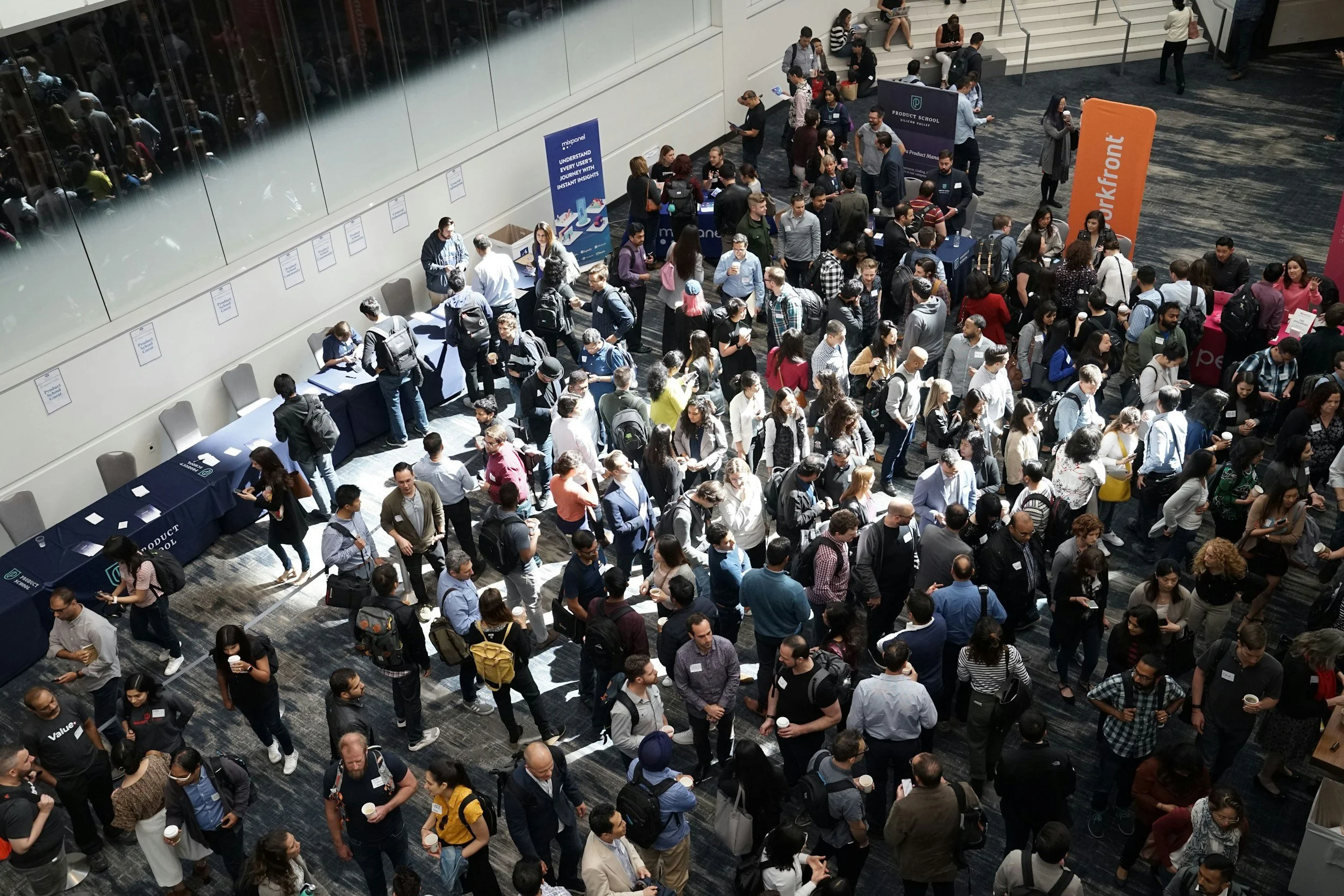
At some point, somewhere between Ubers, standing in TSA Pre-Check and thinking maybe I’ll just get Clear, hotel coffee, and collecting enough conference badges to wallpaper a small office, it becomes reasonable to ask the simple question: Are these events actually worth it?
The answer, at least for me, is an unequivocal yes.
There is obvious value in networking, I love free pens (that’s dating me – pens was a few years back, then it was insulated travel mugs, now it’s power banks), and, as anyone who knows me knows, I’m a sucker for food – but that’s not the reason I’m an advocate of industry events. The real reason is perspective, something that is so easy to lose when mired in the day-to-day world of Supply Chain, even in Leadership. It can be easy to forget that we are not at the center of the world at all times, that the challenges and opportunities we face each day are part of a bigger picture and that we are not alone in facing them. Don’t get me wrong I do love a breakfast pastry while standing awkwardly around a high-top table at 7:15 in the morning, patting a pocket and saying ‘no, I don’t have a card on me, I’m afraid’, but that’s not quite enough on its own.
Most of us spend our days responding, attending meetings, dealing with escalations. Reviewing forecasts, project updates, budget discussions., transportation delays, inventory challenges, tariff changes - the inbox never stops, Slack notifications certainly don't stop and before long, it's possible to become so immersed in the day-to-day operation that you can lose sight of the broader environment around you. Conferences create something increasingly rare and remarkably simple: space to think.
I would argue it is one of the most valuable investments an organization can make and not because someone returns with a revolutionary idea that immediately transforms the business, but because stepping away from the daily rhythm allows leaders to lift their heads and look beyond their own four walls. If you’re lucky, you’ll also come back with some revolutionary ideas – I certainly get hugely inspired at these events – whether it’s thinking about ways of working, subject matter expertise (as after all, our industry is always changing), macro-economic changes or simply meeting someone else in the same proverbial boat.
The best conferences remind us that our challenges are rarely unique, I think of TPM earlier this year where conversations quickly shifted from ocean contracts and carrier performance toward geopolitical risk and the emerging conflict involving Iran. At Reuters Supply Chain USA, discussions around tariffs sat alongside sessions on AI, risk management, and organizational design, at Manifest, technology providers demonstrated solutions that ranged from genuinely innovative to perhaps a little more enthusiastic than practical.
Ironically the common thread wasn't a specific topic but the opportunity to hear how different organizations were approaching similar problems. It’s a chance to remember that challenges are often systemic rather than personal, but also that there are multiple ways to solve problems and, for me at least, an opportunity to reconsider assumptions. The sessions themselves are where I find the greatest return on investment, particularly when they become interactive. A well-run panel or workshop creates an environment where ideas are challenged, experiences are shared, and assumptions are tested. It can go two ways with the audience interaction for a more traditional panel/presentation – I often feel warped back to early days of undergrad and people asking questions to show how smart they are/how much they know versus those who have truly engaging queries.
The best sessions often continue long after the official end time with questions spilling out into hallways, assessment of speaker quality and debate over hasty coffee refills. Someone mentions a challenge they've been wrestling with for months and suddenly three people from entirely different industries offer perspectives they hadn't considered – something that is incredibly difficult to replicate through email, webinars, or LinkedIn posts.
I don’t like think of myself as contrary (yes I do!), but a key way of approaching the talks and seminars isn't about agreeing with everything that is presented, indeed some of the most valuable sessions I've attended are the ones where I disagreed with significant portions of the content. A good conference should stimulate thought, not demand agreement, my goal isn't to return with a notebook full of unquestioned conclusions, it is to return with new questions. I think of CHR Advance a few years ago where they were talking about AI implications for lane analysis and that immediately had me questioning my own organization’s approach to procurement, resulting in my return with very specific questions, inspiration, challenges for my own function, and fully recharged energy too.
A challenge of leadership is you can lose the ability to challenge your own thinking – I know many people who write a strategy deck or document and then rigidly adhere without using updated informational inputs (which ultimately is what conferences are) to iterate and strengthen. Ultimately, conferences are the chance to step away from the (metaphorical) desk, strengthen and build relationships, increase knowledge and maybe, just maybe, getting a bite to eat at the same time.
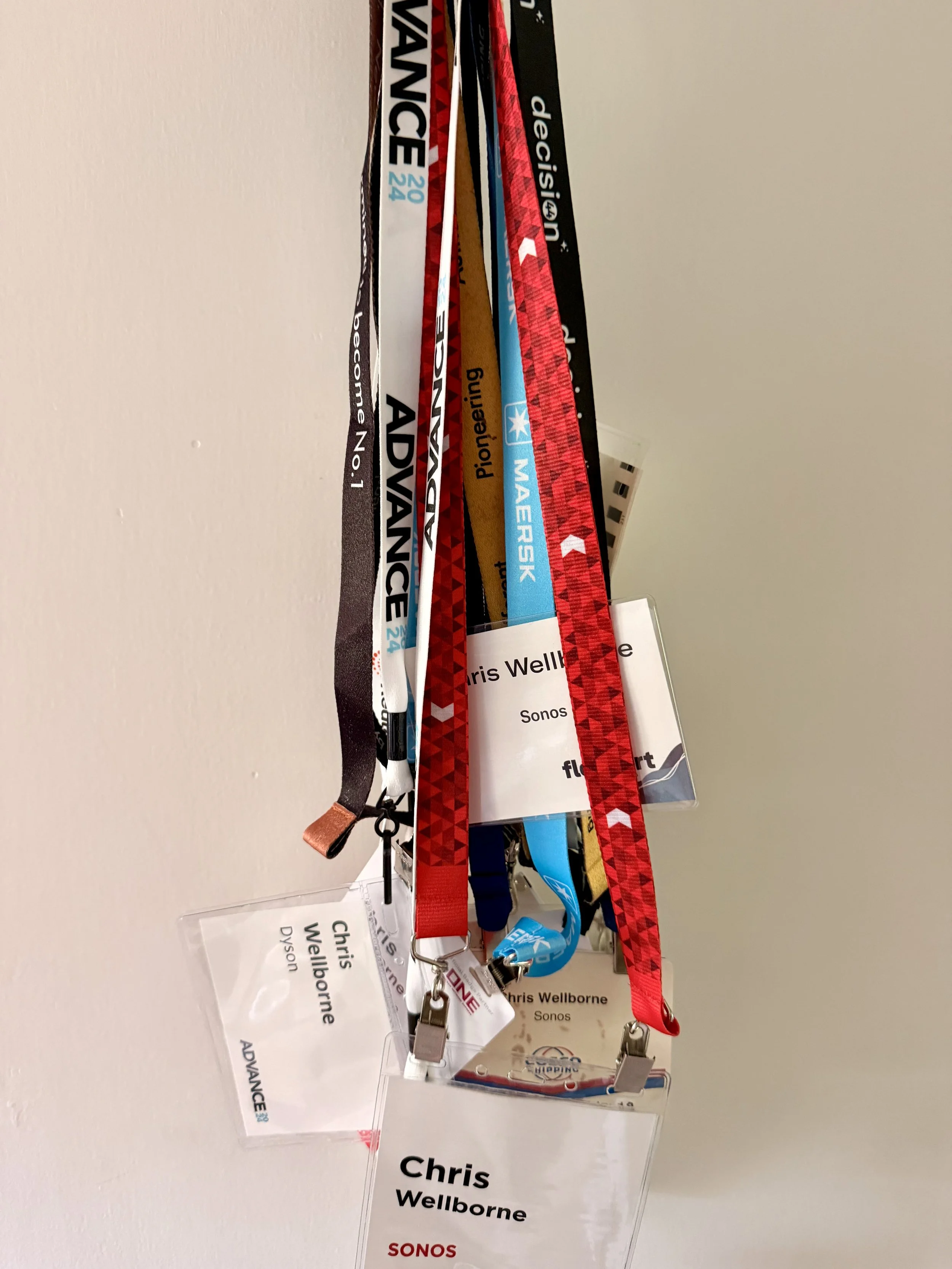
Right, that’s more than enough for this article so I’m going to finish with my declaration of conference independence, my self-evident truths. This gets a bit silly, so if you’re a sensible kind of reader I’d exit out now:
1. Every speaker should be trained on how their individual microphone works. If it’s a Britney-mic, great – hard to go wrong. If it’s hand-held or lapel based at least 50% of a conference budget should go on making sure they know that if they turn their head away we will not be able to hear them
2. Conference comfort is determined only by finding the hidden bathrooms – there’s always one somewhere and you can avoid the post-session crush. I should charge for that tip.
3. It should be a legal requirement that there is a one-hour wind-down between sessions finishing and dinners starting
4. Any speaker who cares more about being funny than what they’re saying should be fired out of a cannon, preferably into a low budget airport motel (no loyalty points). One of the most irritating talks I attended kept being interjected with ‘What, aren’t I funny?’ and ‘I thought you’d like that’.
5. Talk to people. Even the people you don’t really want to talk to. It’s an opportunity you don’t get often and that diversity of opinion, offering and perspective are what makes it worth while. Also makes it easier to ignore on LinkedIn.